India Tour with Business Class Flights – Luxury Holiday Cost & Booking Guide
10 Sep 2026

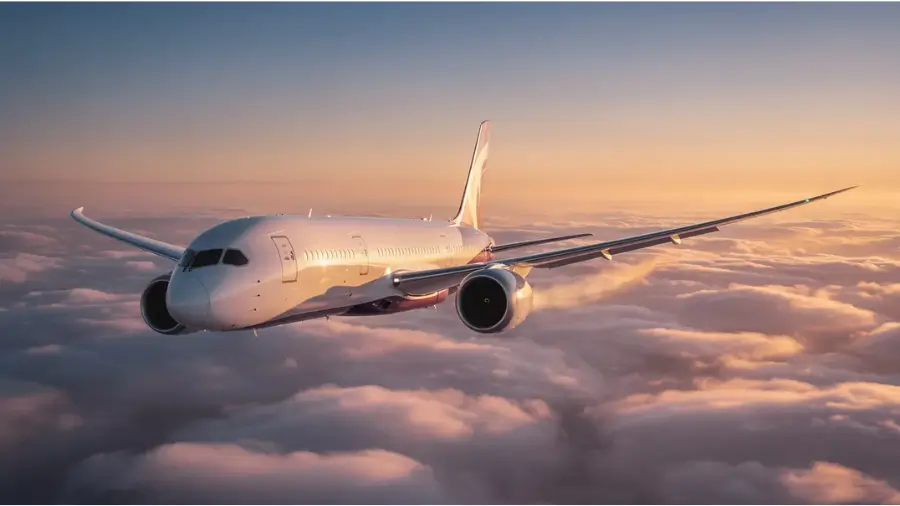
An India tour with business class flights changes the character of a long-haul holiday before the traveller even reaches the country. For guests flying from the United States, United Kingdom, Canada, Australia or Europe, India can involve eight to sixteen hours in the air on a nonstop service and considerably longer when a connection is required. A lie-flat business-class seat, priority airport handling, lounge access and a more comfortable overnight journey can therefore be a meaningful part of a premium private holiday rather than simply an expensive flight upgrade.
The cost, however, needs to be viewed separately from the private ground package. A couple may spend $15,000–$25,000 on luxury hotels, chauffeur-driven transportation and private guides in India, then add another $6,000–$15,000 or more for international business-class tickets. Travellers using premium suites and top long-haul cabins can take the complete holiday well beyond $40,000.
For US travellers, current Air India information gives a useful indication of long-haul pricing. Its New York–Delhi page recently showed business-class fares around $2,892.50 from Newark and $3,304.50 from JFK, with the airline noting that fares vary by season and demand. The same page lists direct New York–Delhi flying time at about 13 hours 45 minutes. Current market data for Los Angeles–Delhi shows average round-trip business-class fares around $3,914 in a lower-priced month and above $4,600 in a stronger month, illustrating how much origin and season can change the cost.
Travellers from London generally face a shorter journey and often lower business-class pricing than travellers beginning on the US West Coast. Recent London–Delhi market data has shown round-trip business-class averages around £1,428 in a lower-priced month and roughly £1,909 during December, although specific premium nonstop flights can cost substantially more.
For a genuinely luxury India holiday, the important question is not simply whether the ticket says business class. Aircraft type, seat configuration, nonstop versus connecting service, baggage allowance and arrival time can make a significant difference to the journey.
International business-class airfare is one of the largest variables in the complete holiday budget because ticket prices react quickly to dates, route availability and demand.
For two travellers, sensible working figures can look like this:
|
International Business Class Route |
Approximate Round-Trip Cost for Two |
|---|---|
|
London to Delhi |
$4,500–$7,500 |
|
New York to Delhi |
$6,000–$9,000 |
|
Chicago to Delhi |
$6,500–$10,000 |
|
Los Angeles to Delhi |
$8,000–$12,000 |
|
Premium connecting business-class itinerary |
$8,000–$14,000 |
|
High-demand dates or premium cabin combinations |
$12,000–$20,000+ |
These are sensible luxury-travel budgeting ranges rather than fixed fares. Live airline prices can move above or below them.
A recent Air India example from New York illustrates the point clearly. Published business-class indications were close to $2,900–$3,300 per person on selected New York-area departures, meaning two travellers can already be near $6,000–$6,600 before the India land arrangements begin. Los Angeles pricing can be much higher, and current route data has shown business-class averages above $4,000 per passenger during several periods.
Once flights are combined with a fourteen-day luxury ground package, the total rises quickly. A couple paying $8,000 for international business-class tickets and $18,000 for the private India arrangements is already at $26,000 before personal dining, shopping, spa treatments and travel insurance.
If the land journey uses major palace hotels and premium suites, a $25,000 ground package plus $10,000 in flights produces a $35,000 holiday for two. Adding top suites and more expensive long-haul seats can move the figure beyond $50,000.
This is why airfare should be considered as a separate major cost category rather than being hidden inside a vague “luxury package” figure.
Ten days works best when the India route remains compact. Travellers should not spend thousands of dollars on business-class seats only to spend half the holiday changing domestic flights and hotels.
A strong first journey can cover Delhi – Agra – Jaipur – Udaipur. Delhi receives the international arrival, Agra provides the Taj Mahal, Jaipur introduces Rajasthan and Udaipur gives the final part of the trip a slower luxury character.
For two travellers, the ground arrangements can reasonably cost around $8,000–$13,000 with premium five-star hotels, private chauffeur services and private guides. Adding international business-class flights can take the complete holiday towards $14,000–$22,000 from London or approximately $16,000–$25,000+ from many US gateways.
The route should be matched to the international flight arrival time. Travellers arriving in Delhi after a long overnight journey should have a private airport transfer and enough time to settle into the hotel. Even after travelling in business class, a full sightseeing day immediately after a long-haul arrival is not always desirable.
Delhi can receive two nights, Agra one night and Jaipur three nights. Udaipur can then receive two or three nights according to the departure route.
A domestic flight may be useful for the Jaipur–Udaipur or final return sector if the available schedule saves meaningful road time. The exact flight needs to be checked before the hotel sequence is confirmed.
Two weeks is one of the strongest durations for international luxury travellers because the airfare becomes a smaller percentage of the complete trip while the ground route remains manageable.
A classic premium route is:
Delhi – Agra – Jaipur – Jodhpur – Udaipur
Delhi can receive two or three nights depending on international arrival time. Agra requires one night when the Taj Mahal is visited around sunrise. Jaipur deserves three nights, Jodhpur around two nights and Udaipur three nights.
For two travellers, a high-quality 14-day luxury India tour can cost approximately $12,000–$20,000 on the ground. Palace hotels and premium suites can take this towards $20,000–$30,000+.
When international business-class flights are added, a realistic total for two travellers can be:
|
Two-Week Luxury India Holiday |
Approximate Total for Two |
|---|---|
|
London business class + luxury ground package |
$18,000–$27,000 |
|
New York business class + luxury ground package |
$20,000–$30,000 |
|
Los Angeles business class + luxury ground package |
$22,000–$34,000 |
|
Palace hotels plus premium business flights |
$30,000–$45,000 |
|
Suites plus premium cabins |
$45,000–$60,000+ |
The most important point is that these totals depend on actual room categories and live airfare. A couple staying in excellent five-star rooms will spend very differently from guests using landmark palace suites.
Three weeks allows the cost of long-haul business class to make even more sense because the international travel days support a substantial holiday rather than a short visit.
A strong route can combine North India with another region:
Delhi – Agra – Jaipur – Jodhpur – Udaipur – Mumbai – Kochi – Kerala Backwaters
Private chauffeur travel works well through Delhi, Agra and Rajasthan. Domestic flights then connect Udaipur with Mumbai and Mumbai with Kochi, avoiding excessively long road transfers.
The land arrangements for two travellers can cost around $20,000–$30,000, while premium palace hotels, suites and Kerala resorts can move the total above $35,000–$45,000.
Adding international business-class airfare creates a complete trip cost of approximately $28,000–$42,000 for two using excellent luxury accommodation. A more exclusive itinerary with prestigious suites, upgraded domestic flights and premium long-haul tickets can cost $45,000–$65,000+.
The advantage of three weeks is that the journey can include genuine leisure days. Guests do not need to visit a monument every morning simply because they have paid for an expensive holiday. Several nights in Udaipur or Kerala can include hotel time, spa treatments and slower meals without reducing the value of the trip.
A nonstop flight is often the most attractive option because it reduces total journey time and eliminates the risk of a missed connection. For travellers from New York, Air India currently advertises direct New York–Delhi service with an approximate flying time of 13 hours 45 minutes.
However, nonstop is not automatically the best option for every luxury traveller.
A one-stop service through Doha, Dubai, Abu Dhabi, Istanbul or a European hub can offer a stronger seat, better lounge or more attractive fare. The trade-off is additional travel time and another airport connection.
For example, a traveller may find a nonstop ticket for $4,500 per person and a highly regarded connecting business-class option for $3,600. Saving $1,800 for a couple can be meaningful, but only if the connection does not create an exhausting itinerary.
Conversely, paying an additional $1,000 or $1,500 per person for a nonstop flight can be worthwhile on a shorter ten-day India holiday because it preserves valuable time.
The decision should therefore consider total journey duration, not airfare alone.
Travellers should check the actual aircraft and seat configuration rather than assuming all business-class cabins provide the same experience.
Some modern long-haul aircraft provide direct aisle access from every business-class seat and fully flat beds. Other aircraft may have older cabin designs or less private seating layouts.
Airlines also swap aircraft, so even a route that normally uses a newer cabin can occasionally operate with a different product.
Couples have another consideration: some business-class seats are more suitable for travelling together, while others provide substantial privacy barriers. A couple may prefer centre seats on one aircraft and window seats on another.
The ideal business class flight to India therefore depends partly on whether the priority is sleeping, privacy, travelling together or minimising total journey time.
Airline branding alone is not enough. The exact flight number, aircraft type and seat map should be checked when tickets are selected.
A flight that costs $400 less but lands at an inconvenient hour can create additional hotel and transfer costs.
Suppose one service arrives in Delhi at 8:30 am and another arrives shortly after midnight. The first may allow travellers to use part of the arrival day, while the second effectively requires an additional hotel night.
Likewise, an early morning arrival may require guaranteed early hotel access. Many luxury hotels have standard check-in during the afternoon, so guests landing at 5:00 am may need the previous night reserved if they want immediate access to the room.
At a luxury Delhi hotel costing $500–$900+ per night, this can partly eliminate the saving gained by choosing a cheaper flight.
Arrival time also affects the road itinerary. Travellers should not land after a long flight and immediately begin a four-hour drive to Agra simply to save one Delhi hotel night.
The private airport transfer should take guests directly to a suitable hotel, and the main road journey can begin after appropriate rest.
Delhi is usually the strongest international gateway when the holiday focuses on the Golden Triangle and Rajasthan.
After airport reception, a private chauffeur can transfer guests to a premium Delhi hotel. The drive into central New Delhi can take around 30 to 60 minutes in lighter traffic and longer during busy periods.
Two or three nights give travellers enough time to recover and see the city properly.
The main sightseeing day can include Humayun’s Tomb, Qutub Minar and selected areas of Old and New Delhi. A private local guide provides context, while the chauffeur handles transport between sites.
Luxury Delhi rooms can commonly cost $400–$900+ per night, with high-end suites moving considerably higher.
From Delhi, the road route continues naturally to Agra. This is why travellers should avoid flying into Mumbai simply because the international business fare is marginally cheaper when the holiday itself begins in North India. The additional domestic connection can erase the saving and add inconvenience.
For a longer India journey, an open-jaw international ticket can be useful.
A traveller might fly into Delhi, travel through Rajasthan, continue to Mumbai or Kerala and then depart internationally from Mumbai rather than returning all the way to Delhi.
This reduces unnecessary backtracking.
The business-class ticket should therefore be searched as a multi-city journey rather than automatically purchasing a Delhi round trip.
The fare may be slightly higher, but saving a domestic flight and a hotel night can make the total holiday more efficient.
This is particularly useful for 21-day luxury India tours that move from North India towards western or southern India.
Travellers who fly long-haul business class sometimes expect every domestic premium cabin in India to provide the same product. That is not always the case.
Domestic flights are much shorter, and business-class seating can vary by aircraft. A short domestic flight may provide wider seats and additional service without the fully flat bed found on an international wide-body aircraft.
For routes such as Udaipur–Mumbai or Delhi–Kochi, the main value can be additional comfort, priority services, baggage allowance and flexibility rather than sleeping accommodation.
Business class is also not available on every domestic route or every departure.
The quotation should therefore specify the route and cabin where domestic premium tickets are included rather than simply promising “business class flights throughout.”
For some short sectors, a flexible economy or premium fare with sufficient baggage may make more practical sense. Luxury travel does not require purchasing a business-class ticket where the product adds little benefit.
International business-class tickets usually provide more generous baggage allowances than economy fares, but domestic connections can operate under different rules.
This matters because luxury travellers on two- or three-week holidays may have large suitcases, formal clothing, shopping and additional hand luggage.
A traveller could arrive in India with an international allowance that is considerably higher than the domestic ticket permits.
If domestic sectors are included, the baggage conditions should therefore be checked before tickets are issued.
Paying for additional baggage in advance can be easier and less expensive than discovering the difference at airport check-in.
For couples travelling with four large suitcases, the private ground vehicle also needs adequate luggage space. A premium MPV can be more practical than an executive sedan despite the sedan having a more prestigious badge.
Business-class travel commonly includes airport lounge access where the airline and airport provide an eligible facility.
This can be particularly useful before long-haul departures because travellers can eat, work, shower at selected lounges or simply sit in a quieter environment before boarding.
On connecting itineraries, lounge quality can become even more important because the traveller may spend several hours at the transit airport.
However, lounge access should not be the primary reason to choose an inferior schedule. A four-hour connection solely to experience a premium lounge may not be worthwhile when a nonstop flight is available.
For a luxury India holiday with business class flights, the strongest itinerary usually combines a good cabin with sensible departure and arrival times.
The airfare should not force the hotel standard so low that the overall holiday feels unbalanced.
Travellers spending $8,000–$10,000 on business-class flights for two often expect the ground experience to remain at a comparable level.
Delhi luxury hotels can commonly cost $400–$900+ per night. Agra premium rooms can range around $450–$1,100+, especially for desirable Taj Mahal positioning. Jaipur and Udaipur can move into $600–$1,500+ per night, while prestigious suites can reach several thousand dollars.
A fourteen-night journey can therefore carry a hotel bill of $10,000–$20,000 before transportation and sightseeing.
The strongest balance is often to use excellent five-star rooms throughout and spend more heavily on two or three exceptional stays rather than booking the most expensive suite every night.
There is little value in arriving on a lie-flat long-haul flight and then spending six hours in an uncomfortable road vehicle.
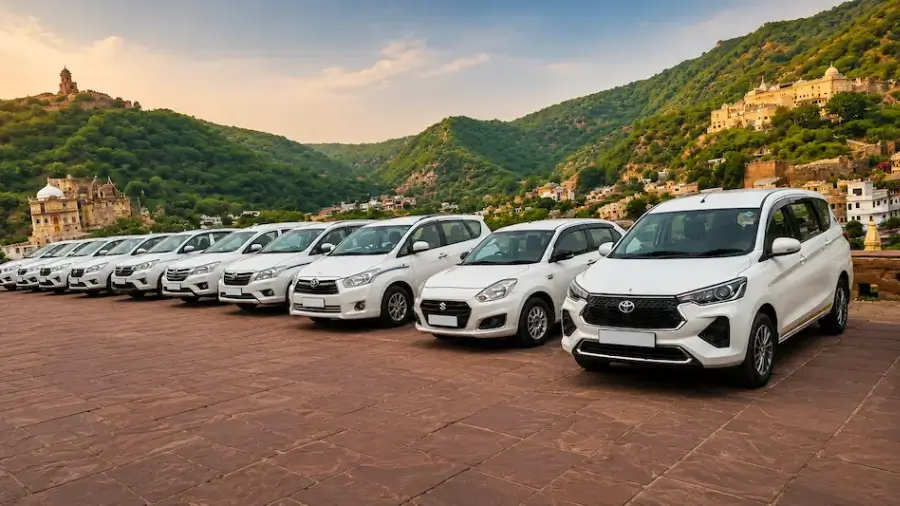
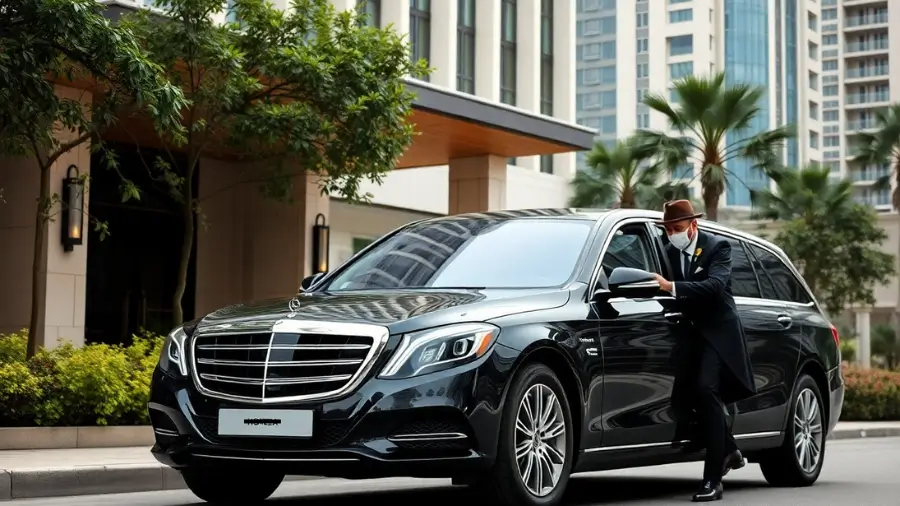
A premium India package should use a clean, spacious, properly air-conditioned vehicle with enough room for passengers and luggage.
For two travellers, a premium MPV is often more practical than a standard sedan. Luxury SUVs and executive vehicles can also be arranged according to preference.
The chauffeur can cover Delhi Airport transfers, Delhi–Agra, Agra–Jaipur and the onward Rajasthan road journey.
Fuel, tolls, parking and routine chauffeur expenses should be included within the transportation element.
Private local guides can join separately in the major sightseeing cities.
This continuity allows the luxury standard to remain consistent after the airport arrival.
A full quotation should separate the international airfare from the private India ground package unless the flights are genuinely being sold as part of the same arrangement.
The ground package should name every hotel and room category, identify the chauffeur vehicle, list the private guides and state which monument tickets or activities are included.
Airport reception should be provided at the international gateway. Domestic flights should be identified by route and cabin.
The business-class international ticket should clearly state the airline, route, fare conditions and baggage allowance when included.
Travellers should also know whether the ticket is changeable or refundable. Business class does not automatically mean the fare has unrestricted cancellation conditions.
Taxes and mandatory charges should be included in the quoted airfare whenever possible so the traveller can see the actual total.
Premium hotel availability and business-class seat inventory do not always move in the same way.
A traveller may find an excellent flight fare while the desired palace hotel is already nearly full. Another traveller may secure the ideal suite but delay the flight purchase until the business fare rises substantially.
For high-value journeys, the major hotel and flight components should therefore be coordinated closely.
Current route data also demonstrates how seasonal business-class prices can move. London–Delhi market averages have recently ranged from roughly £1,428 in a lower-priced month to around £1,909 in December, while Los Angeles–Delhi business-class averages have ranged from about $3,914 to more than $4,600.
These are averages rather than promises, but they show why postponing the ticket purchase can materially affect the complete holiday cost.
The international gateway should be decided first. Delhi is normally the strongest arrival point for the Golden Triangle and Rajasthan, while an open-jaw departure through Mumbai can work well for longer multi-region trips.
The business-class flight should then be judged on seat quality, journey duration, departure time, arrival time, baggage and fare flexibility.
The India route can be matched to those confirmed flights. There is little value in choosing hotels before knowing whether the international arrival lands at 6:00 am or 11:30 pm.
Accommodation can then be selected according to the traveller’s preferred standard, followed by the chauffeur vehicle and private guides.
India Personal Tours can arrange the private land itinerary and coordinate the route around the confirmed international flights, while the traveller retains clarity about what portion of the total cost relates to airfare and what portion relates to the India ground arrangements.
A successful premium holiday should feel consistent from the airport departure lounge through the final hotel transfer. Business class makes the long-haul journey easier, while thoughtful ground logistics ensure that the comfort continues after landing.
Every traveller is unique, and every journey should be equally distinctive. Share your travel aspirations with us, and our travel specialists will craft a bespoke itinerary tailored to your interests, preferences, and travel style. From private transportation and handpicked accommodations to authentic, immersive experiences, every detail will be thoughtfully curated for you. Your personalised travel proposal will be delivered within 24 hours.
Find answers to the most common questions about our tours, booking process, private drivers, accommodations, and travel services.
A ten- to fourteen-day luxury India holiday for two can reasonably cost around $18,000–$30,000 including international business-class flights and private ground services. Palace suites and more expensive premium cabins can raise the total to $35,000–$50,000 or more.
Air India has recently shown business-class indications around $2,892.50 from Newark and $3,304.50 from JFK per person, although fares vary by travel date and demand.
Recent market data has shown round-trip business-class averages around $3,914 in a lower-priced month and above $4,600 in stronger months. Exact fares vary considerably according to airline and date.
Recent London–Delhi business-class market data has shown round-trip averages of roughly £1,428 in a lower-priced month and around £1,909 in December. Premium nonstop tickets can cost more.
A nonstop flight usually saves several hours and removes the risk of a missed connection. A one-stop service can still be attractive when the cabin is stronger or the fare is substantially better.
Yes. Delhi is generally the most practical gateway for a route through Delhi, Agra, Jaipur, Jodhpur and Udaipur because it avoids an unnecessary domestic flight before the road journey begins.
Yes. An open-jaw ticket can be very useful on a longer journey that ends in Mumbai or western India because it prevents unnecessary backtracking to Delhi.
Not always. It can provide additional comfort, baggage and priority services, but the product varies by aircraft and route. For short sectors, the practical difference may be smaller than on long-haul international flights.
Not automatically. Refund and change conditions depend on the specific fare purchased. Travellers should check the ticket rules even when buying a premium cabin.
Yes. India Personal Tours can structure the private chauffeur route, luxury hotels, local guides and domestic connections around the traveller’s confirmed international business-class arrival and departure schedule.